

Should I Fix My Home Loan Rate After CommBank’s Latest Move?
Key Takeaways CommBank raised fixed home loan rates in January 2026, anticipating potential RBA rate hikes. Banks typically adjust fixed...
The dream of building wealth through property investment can quickly turn into a nightmare when investors make avoidable mistakes. According to Australia’s leading property experts, the biggest catastrophes happen when people select investment properties without proper research and the financial consequences can last for decades.
As mortgage broker and property investment expert Jane Slack-Smith explains in her acclaimed courses, investors repeatedly “trip over the same pitfalls time and again” when they fail to conduct thorough research before making property decisions. Understanding these critical mistakes can save you hundreds of thousands of dollars and years of regret.
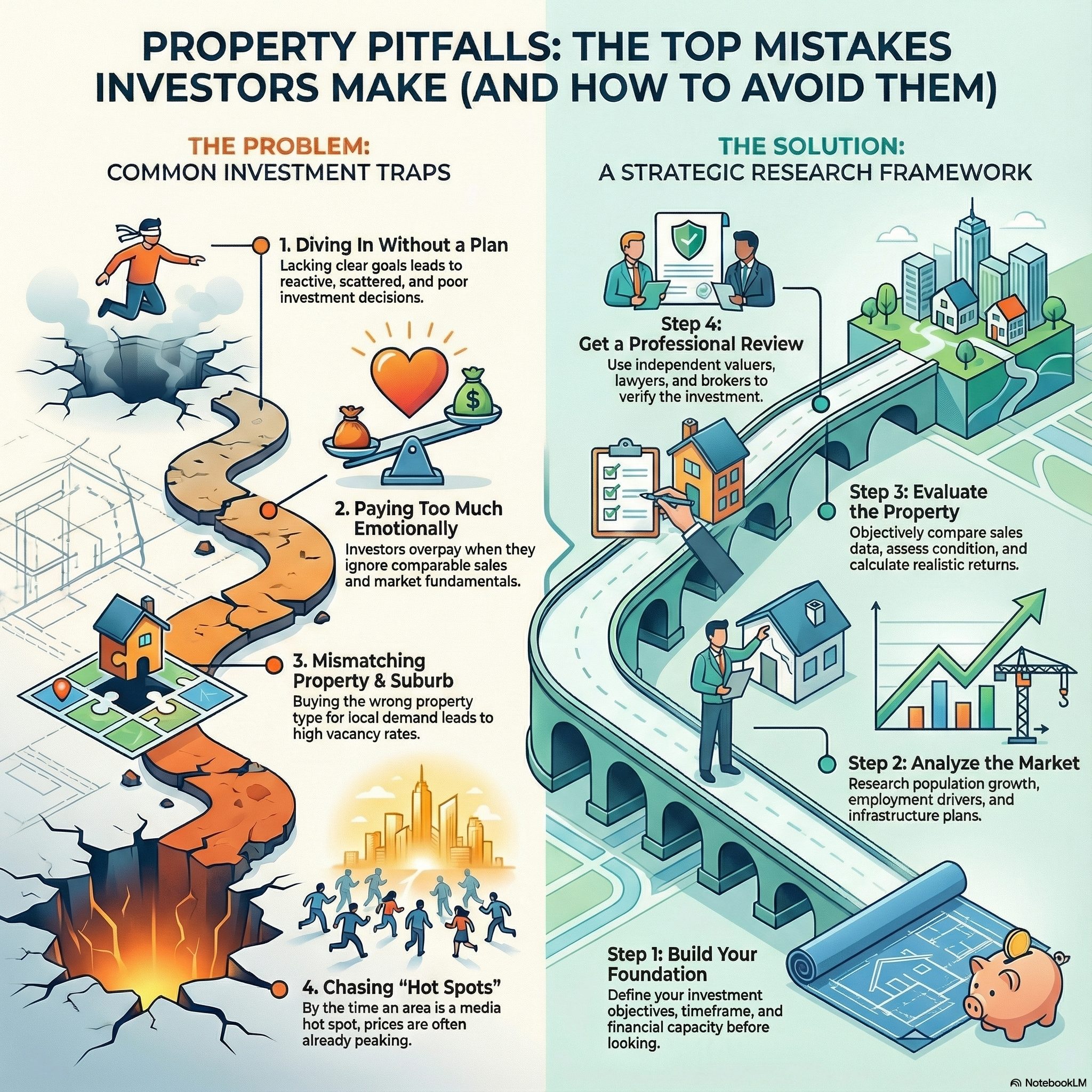
The number one mistake investors make is diving into property investment without a solid plan and clear goals. This fundamental flaw underlies virtually every other error that follows.
“You dive in without a strategy, timeframe, or clear criteria like ‘Does this fit my goal of building equity in capital cities with population growth?'” explains Jane. “No wonder it feels overwhelming when inspecting properties too early.”
Without a strategic foundation, investors lack the framework to evaluate opportunities effectively. They become reactive rather than proactive, making decisions based on what’s available rather than what aligns with their wealth-building objectives. This leads to a scattered approach where investors jump between different markets, property types, and strategies without building cohesive momentum.
The most successful investors establish their goals first, whether that’s generating passive income for retirement, building equity for future purchases, or creating a legacy for their children. Only then do they develop criteria for property selection that supports these objectives.
The third most common mistake from Jane’s “Dirty Dozen” list is paying too much for properties, particularly when emotions override fundamental analysis. This happens frequently because investors fail to research comparable sales, future value projections, or market fundamentals before making offers.
“First-timers especially get swept up, ignoring comps or future value,” Jane notes. “Sure, advanced investors might overpay knowingly for infrastructure plays, but without research, you’re just hoping time heals it in growth areas.”
The research process should include:
When investors skip this research phase, they often discover too late that they’ve purchased at the peak of a market cycle or in an area with limited growth prospects. The financial impact compounds over time, as overpaying at the start means starting from behind in terms of equity building.
One of the most frustrating mistakes is purchasing the wrong property type for a particular suburb, a problem that could be easily avoided with proper market research.
“Like grabbing a one-bed unit where data shows only 10% are that size, so it sits vacant for months,” Jane explains. “Or settling for a unit because houses are unaffordable, but your suburb stats were house-focused, missing unit oversupply risks.”
This mismatch occurs when investors fail to research the local rental market and demographic preferences. Each suburb has its own character and attracts different types of tenants:
Proper research involves analysing rental listings, vacancy rates by property type, and demographic data to understand what tenants actually want in each specific location. This prevents the costly mistake of owning a property that struggles to find suitable tenants.
Off-plan purchases represent another research-related pitfall that catches many inexperienced investors. Without proper analysis, buyers often pay inflated prices based on promised future value rather than current market reality.
“Developers bake in ‘future growth’ premiums, so you’re paying $400k now for what might really be worth $350k later, with limited comps to check value,” Jane warns.
The off-plan trap is particularly dangerous because:
Research should include analysing similar projects in the area, understanding the developer’s track record, and carefully evaluating the price premium being charged for future delivery. Independent valuations and legal reviews become especially critical for off-plan purchases.
I remember chatting with a woman at a barbecue who illustrated this exact danger perfectly. She had bought into one of those house-and-land packages years ago, far from her home, based solely on a developer’s pitch about ‘guaranteed future growth.’ She admitted she hadn’t done any deep local research, and the real cost of that mistake hit her hard when brand-new homes started popping up right next door. Her property sat vacant for months, and the rental income wasn’t even close to covering the mortgage. The financial pressure was so extreme that her family actually had to move out of their own home and rent it out just to cover the investment shortfall. It was a heartbreaking reminder that paying a premium for a distant, unresearched dream can quickly become a life-altering nightmare.
While lack of research is dangerous, the opposite extreme, drowning in scattered information without focus, can be equally problematic. This leads to what Jane describes as “analysis paralysis from too much scattered info without narrowing to 8-10 suburbs first.”
The solution is systematic research that follows a logical progression:
This focused approach prevents information overload while ensuring thorough analysis of genuine opportunities. It also helps investors avoid getting distracted by every new market report or property spruik that comes their way.
One of the most expensive mistakes is chasing “hot spots” and following crowd psychology instead of conducting independent research. When everyone piles into the same areas, competition drives up prices and eliminates opportunities.
Recent market analysis shows that by the time media outlets are promoting certain suburbs as the “next big thing,” smart money has often already moved on. The best investment opportunities are typically found in areas that haven’t yet attracted mainstream attention but have strong underlying fundamentals.
Successful investors focus on suburbs with:
This contrarian approach requires confidence to ignore popular opinion and stick to research-based decisions. It’s often the difference between buying before the wave hits versus chasing it after prices have already peaked.
The complexity of property investment research highlights why successful investors work with qualified professionals who understand market dynamics and can provide objective analysis.
Rita, a typical client of Investors Choice Mortgages, represents many investors who feel overwhelmed by the research requirements. She values expert guidance that helps her “navigate the complexity of property investing and growing their portfolio with confidence.”
Professional support should include:
As Jane emphasises, “Always research goals first, use tools like CoreLogic RP Data for custom CMAs and radius comps, and test every property against your plan. Do your due diligence, folks, it’s your wealth on the line!”
Successful property investment research follows a systematic approach that minimises emotion and maximises objective analysis:
Stage 1: Strategic Foundation
Stage 2: Market Analysis
Stage 3: Property Evaluation
Stage 4: Professional Review
This framework helps investors avoid the common trap of falling in love with properties emotionally rather than evaluating them objectively as income-producing assets.
The biggest mistakes in property investment stem from inadequate research and emotional decision-making. From buying without a strategic plan to chasing hot spots and falling for off-plan traps, these errors can derail wealth-building goals for years or even decades.
Success requires a disciplined approach that prioritises thorough research, professional guidance, and systematic evaluation over gut feelings and popular trends. By understanding these common pitfalls and implementing a structured research framework, investors can make informed decisions that build lasting wealth.
Remember, property investment is a long-term strategy that rewards patience, research, and strategic thinking. The time invested in proper due diligence upfront pays dividends throughout the entire investment journey.
Ready to avoid these costly mistakes and build your property portfolio with confidence? Watch our AI property investor tools walkthrough here to discover how technology can streamline your research process and help you make better investment decisions.
How long should I spend researching before buying an investment property?
Most successful investors spend several months researching and planning before making their first purchase. The initial strategy development and suburb selection process typically takes 4-8 weeks, followed by specific property evaluation over 2-4 weeks. Remember, this research time prevents costly mistakes that could take years to recover from.
What are the most important data points to research for each suburb?
Focus on population growth trends, employment opportunities, vacancy rates (aim for under 3%), median prices and rental yields, planned infrastructure developments, and demographic profiles of typical residents. These fundamentals drive long-term investment performance more than short-term price movements.
Should I avoid off-plan purchases completely?
Off-plan purchases aren’t inherently bad, but they require extra caution and research. Ensure you’re not paying excessive premiums for future delivery, research the developer’s track record thoroughly, obtain independent valuations, and understand all contract terms including sunset clauses. Consider whether the same money could buy an existing property with immediate rental income.
How can I tell if I’m following the crowd rather than making independent decisions?
Warning signs include: buying in areas heavily promoted in media, following recommendations without independent research, feeling rushed due to “fear of missing out,” or choosing properties based on popularity rather than fundamentals. Independent research should drive your decisions, not market hype or peer pressure.
Key Takeaways CommBank raised fixed home loan rates in January 2026, anticipating potential RBA rate hikes. Banks typically adjust fixed...

Key Takeaways Strategic planning, robust financing, and clear investment goals are crucial for building a profitable investment property...