

Why Do Interest Rates Rise During Inflation?
When inflation climbs, interest rates typically rise because central banks - like Australia's Reserve Bank - deliberately make...
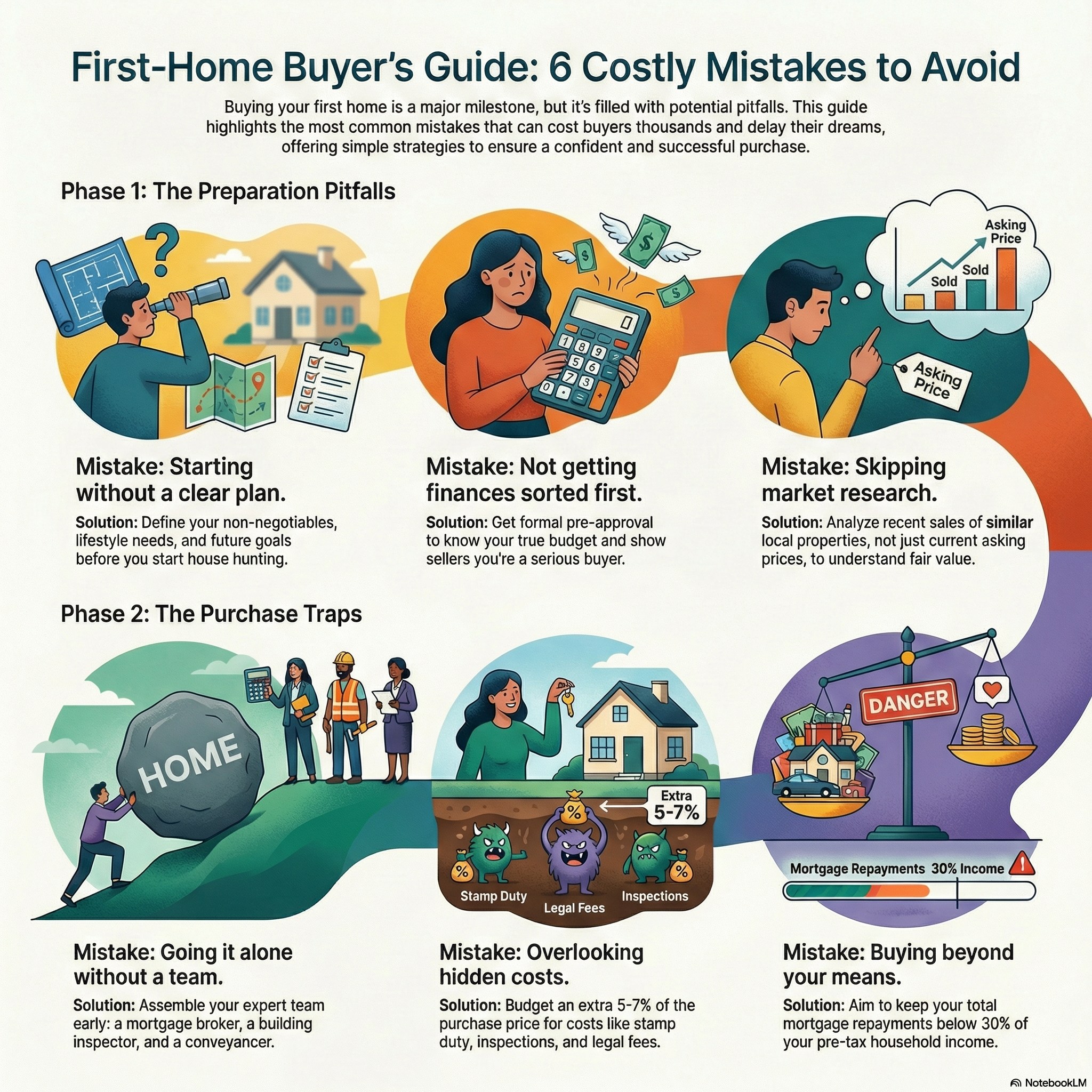
The journey to homeownership can feel overwhelming, especially when you’re stepping into the property market for the first time. Every year, thousands of first home buyers across Australia make costly mistakes that could have been easily avoided with the right guidance and preparation.
These mistakes aren’t just minor inconveniences – they can cost you tens of thousands of dollars, delay your homeownership dreams by years, or saddle you with a property that doesn’t meet your needs. The good news? Most of these pitfalls are completely preventable when you know what to look out for.
After helping countless first home buyers navigate the property market, I’ve identified seven critical mistakes that come up again and again. More importantly, I’ll show you exactly how to avoid each one, so you can make confident, informed decisions that set you up for long-term success.
One of the biggest mistakes first home buyers make is rushing into the market without a clear strategy or long-term vision. This isn’t just about knowing you want to buy a house – it’s about understanding exactly what you want to achieve and how property ownership fits into your broader life goals.
Without clear objectives, you’re essentially shopping blindfolded. You might fall in love with the wrong type of property, choose a location that doesn’t suit your lifestyle, or make decisions based purely on emotion rather than sound financial planning.
I’ll never forget my own rookie error as a first-time buyer. In my early twenties, dazzled by city lights and rooftop views, I bought the very first apartment that sparked excitement—without so much as a second list of “must-haves,” a five-year plan, or a glance at local market data. The high faded quickly once the reality of a 90-minute commute, noisy neighbours, and limited growth potential set in. Within a year, I found myself dreading the trek home and frustrated by having little say in the building’s management. More painful still was realising I’d stretched for a suburb that didn’t actually fit my lifestyle or budget simply because the apartment “felt right” in the moment. That experience drilled home a lesson I share with every client: without crystal-clear goals and an honest map of your needs—now and in the future—emotions can run the show and lead to choices you regret.
Start by setting specific, measurable goals. Ask yourself: What’s your timeframe for purchasing? Are you looking for a home to live in for 2-3 years or your forever home? Do you want a property that offers capital growth potential, or are you focused on lifestyle and amenities?
Consider your future plans. Are you planning to start a family? Will your career require you to relocate? Do you want the option to rent out rooms or convert the property into an investment down the track?
Write down your non-negotiables versus your nice-to-haves. This might include things like proximity to public transport, number of bedrooms, outdoor space, or parking. Having this clarity will help you stay focused when you’re caught up in the excitement of house hunting.
Many first home buyers make purchase decisions based on emotion rather than thorough market analysis. They fall in love with a pretty kitchen or a nice view without understanding whether they’re paying fair value or choosing a property with strong growth potential.
This mistake often stems from excitement and impatience. When you’ve been searching for months, it’s easy to get swept away by the first property that feels like “the one.” But without proper research, you might end up overpaying significantly or buying in an area with poor growth prospects.
Compare apples with apples by looking at recent sales of similar properties in the same area – same number of bedrooms, similar land size, comparable condition. This gives you a realistic benchmark for pricing.
Spend time in the area at different times of day and week. Visit during peak hour to understand traffic patterns, check out local amenities, and get a feel for the neighbourhood vibe. Talk to locals if you can – they’ll give you insights you can’t get from online research.
Research the area’s growth drivers. Are there major infrastructure projects planned? Is the area gentrifying? Are good schools nearby? These factors significantly impact both lifestyle and capital growth potential.
Don’t limit yourself to one suburb. Expand your search to include neighbouring areas that might offer better value or growth potential. Sometimes the best opportunities are in the suburb next door that everyone’s overlooking.
This is perhaps the most heartbreaking mistake first home buyers make. You find the perfect property, fall in love with it, make an offer, and then discover you can’t actually get the finance you need – or there are delays that cause you to lose the property altogether.
Getting finance approval should be your very first step, not something you sort out after you’ve found a property. Yet many buyers start shopping before they know exactly what they can borrow or what their repayments will be.
Get genuine pre-approval, not just a rough estimate. This means providing all your financial documents and getting a formal assessment of your borrowing capacity. Pre-approval typically lasts 90 days and shows sellers you’re a serious buyer.
Don’t borrow to your maximum capacity just because you can. Factor in your actual living expenses, not just what the bank calculates. Remember, interest rates can rise, and your circumstances might change.
Understand the First Home Guarantee scheme if you’re eligible. This allows you to buy with just a 5% deposit while avoiding lenders mortgage insurance, potentially saving you $15,000-$25,000. But remember, you need your latest Notice of Assessment from the ATO to apply.
Consider working with a mortgage broker who can help you navigate different lenders and loan products. They can often access better rates and help structure your loan for your long-term goals, not just this purchase.
First home buyers often try to handle everything themselves to save money, but this penny-wise-pound-foolish approach frequently costs more in the long run. Even experienced property professionals build teams around them – there’s simply too much at stake to go it alone.
Mortgage Broker: They’ll help you navigate different lenders and loan products, often accessing better rates than going direct to banks. Good brokers also structure loans for your long-term strategy, not just this purchase.
Buyer’s Agent: While not essential for everyone, they can be invaluable in competitive markets. They have access to off-market properties and can attend auctions when you can’t. More importantly, they remove emotion from the process.
Building and Pest Inspector: This is non-negotiable. Even new homes can have issues. A good inspector will attend the property with you and explain their findings, helping you understand what’s serious versus cosmetic.
Conveyancer/Solicitor: They’ll handle contracts, searches, and settlement. Choose someone who specialises in property law and will explain things in plain English.
The key is building these relationships before you need them, not scrambling to find professionals when you’re under contract pressure.
Many first home buyers focus solely on the purchase price and deposit, forgetting about the numerous additional costs involved in buying property. This oversight can blow budgets and create nasty surprises just when you think you’re nearly over the finish line.
Budget for all upfront costs, not just stamp duty. As a rough guide, add 5-7% of the purchase price for all additional costs on top of your deposit.
Never skip building and pest inspections to save money. The $500 inspection cost is nothing compared to discovering a $20,000 structural issue after you’ve bought. Always use independent inspectors, not ones recommended by the selling agent.
Get multiple quotes for inspections and conveyancing, but don’t necessarily choose the cheapest. A thorough building inspection that finds issues could save you tens of thousands in negotiation power.
Use inspection results strategically. Even minor issues can be used to negotiate the purchase price or have repairs completed before settlement.
Many first home buyers make timing-related mistakes, either waiting indefinitely for the “perfect” market conditions or making panicked decisions based on fear of missing out.
Focus on “time in the market” rather than “timing the market.” Property is a long-term investment, and trying to perfectly time your entry point is nearly impossible.
Do understand seasonal patterns. In most Australian markets, spring (September-November) is traditionally the busiest period with more stock but also more competition. Summer can offer better buying conditions with less competition.
Be prepared to act when you find the right property at the right price, regardless of broader market sentiment. Good properties in good locations will always have value.
Don’t let rising interest rates completely derail your plans if you’ve done proper budgeting. Small rate rises on a well-structured loan are manageable, and rates don’t stay high forever.
The final major mistake is financial overextension – either buying a property beyond your comfortable budget or spending too much on renovations that don’t add equivalent value.
Buy well within your means, not at the maximum the bank will lend. This gives you buffer for rate rises, job changes, or life events.
If you’re planning renovations, focus on improvements that add value for your target market, not just your personal preferences. Kitchen and bathroom updates typically offer the best returns, while highly personal modifications may actually reduce appeal.
Remember that your first home doesn’t have to be your forever home. You can start with something modest and upgrade as your equity and income grow. The key is getting into the market and building equity.
Calculate the total cost of ownership, including rates, insurance, maintenance, and strata fees if applicable. These ongoing costs can add $300-$600 per month to your housing expenses.
The property market doesn’t have to be overwhelming when you’re properly prepared. By avoiding these seven common mistakes, you’ll be well-positioned to make confident, informed decisions that serve your long-term financial goals.
Remember, buying your first home is a significant financial decision, but it’s also an exciting milestone. Take the time to plan properly, build the right team around you, and focus on finding a property that aligns with both your current needs and future aspirations.
The key is starting with education and preparation rather than jumping straight into house hunting. When you understand the process, potential pitfalls, and have your finances properly structured, you’ll approach the market from a position of strength rather than desperation.
Ready to take the next step? The most successful first home buyers are those who get their finances sorted first. Book a mortgage review call today to understand your borrowing capacity, explore your options, and create a finance strategy that sets you up for success. Don’t let inadequate preparation be the thing that costs you your dream home – get your finance foundations right from the start.
How much deposit do I really need as a first home buyer?
While traditionally you needed 20% to avoid Lenders Mortgage Insurance, government schemes like the First Home Guarantee allow eligible buyers to purchase with just 5% deposit. However, having a larger deposit gives you more negotiating power, better loan terms, and lower ongoing repayments. Aim for at least 10-15% if possible, but don’t let the perfect deposit amount stop you from getting started.
Should I buy at the top of my borrowing capacity?
Absolutely not. Banks calculate serviceability based on current rates and their assessment of your expenses, but they don’t account for interest rate rises, job changes, or life events like starting a family. A good rule of thumb is to borrow 10-20% less than your maximum capacity to ensure you can comfortably manage repayments even if circumstances change.
Is it worth buying a property that needs work as a first home buyer?
This depends on your budget, skills, and risk tolerance. Properties needing cosmetic work (painting, flooring, kitchens) can offer good value if you have renovation budget and capability. However, avoid properties with structural issues, major electrical/plumbing problems, or heritage restrictions unless you’re experienced with renovations. Remember, your first home should be liveable while you’re working on improvements.
How do I know if I’m paying too much for a property?
Research recent sales of comparable properties in the same area – similar bedrooms, land size, and condition. Look at sales from the last 3-6 months rather than asking prices of current listings. If you’re paying more than 5-10% above recent comparable sales, question whether the premium is justified by unique features, better condition, or improved market conditions. When in doubt, get a professional valuation.
When inflation climbs, interest rates typically rise because central banks - like Australia's Reserve Bank - deliberately make...

Market volatility is inevitable in property investing, but it doesn't have to derail your wealth-building plans. Most successful...