

Is Investor Activity Set to Fall?
Australia's property investors are facing a double headwind in 2026 - and the latest lending data confirms the retreat has already begun....
Here’s a sobering reality check: most aspiring property investors never get past their first property. They purchase emotionally, structure their finances poorly, and abandon their dreams when markets shift. But what if you could follow a research-backed blueprint that turns everyday Australians into successful property investors?
After more than 20 years of building an eight-figure property portfolio and coaching thousands of Australians, one pattern stands out: those who adopt a systematic approach not only survive changing markets but thrive through all conditions.
The truth is, building a profitable investment property portfolio is rarely about luck, perfect timing, or large amounts of capital. It’s about following a proven methodology that strips away uncertainty and maximises your wealth-building power. That methodology is the Trid3nt Strategy® — a low-risk, repeatable system that has helped countless Australians achieve financial freedom through property.
Too often, property investment advice only scratches the surface—focusing on what or where to buy. Successful investors, however, know the real foundation is understanding your personal financial position and aligning every decision with your long-term goals.
Remember: 78% of Australian property investors earn less than $80,000 per year. These are everyday workers—from teachers to tradies—who’ve learned the system for building wealth. This is because success isn’t about income; it’s about system.
I’ll never forget one client, Sarah, a single mother and primary school teacher. She came to me earning less than $40,000 a year, feeling property investment was a total pipe dream reserved only for the wealthy. But by committing to the Trid3nt Strategy, we focused on precision planning, not her salary. Within four years, she followed the step-by-step plan to acquire her first property, and then leveraged that equity to secure two more. Her story proves that the right methodology is far more powerful than a massive pay cheque.
What sets them apart from those who never get started? They apply a structured, strategy-first approach, treating property as a business with processes, measurement and accountability. The Trid3nt Strategy provides this vital framework, helping you shift from gambling on property to strategic wealth creation.
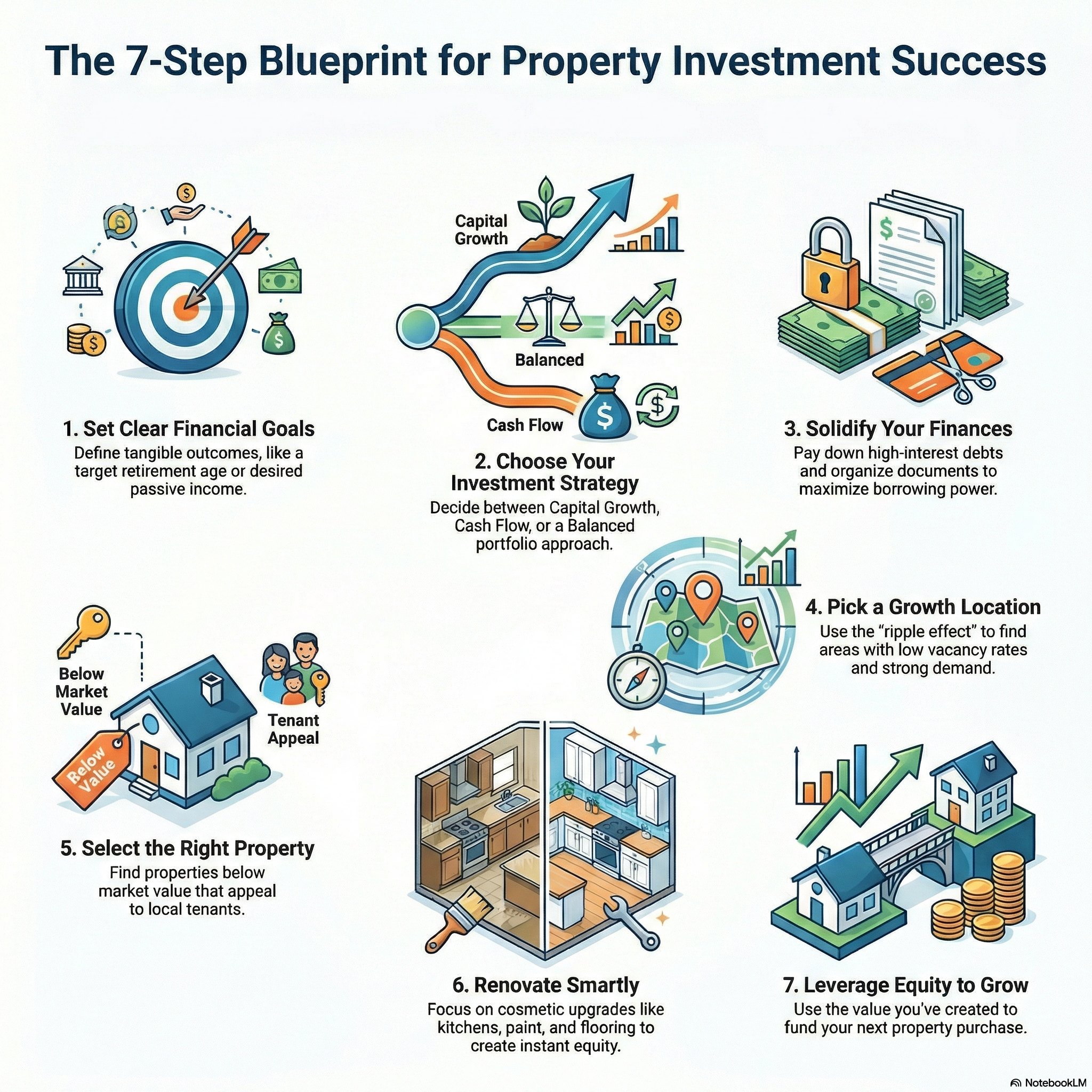
A profitable investment property portfolio isn’t built on risk or guesswork. The Trid3nt Strategy breaks the process into seven actionable steps:
Before browsing properties, clarify your destination. Swap vague goals like “getting rich” for tangible, measurable outcomes.
Your goals set your portfolio size, property types, and investment timeline. Start with your end goal and work backwards, so your investment journey always moves you closer to financial freedom.
Your strategy should match your goals, not the other way around. Decide if your focus is:
The right strategy guides your property types and location choices.
Serious investors stand out by securing a solid financial foundation and maximising bank lending opportunities.
This preparation ensures you can finance your journey strategically from the outset.
Location choice is key to property performance. The ripple effect—where growth radiates from suburbs already prospering—lets you identify areas primed for uplift.
Target locations with:
These signs show there’s strong rental demand and upcoming value growth. Suburbs benefiting from infrastructure, population growth, and government investment often lead the way.
Once you’ve pinpointed a location, select properties below market value that appeal directly to your target tenants.
This targeted approach keeps properties in demand and supports consistent rental returns.
Strategic renovation, rather than overcapitalising, delivers returns.
Focus on:
Properties presented well attract more interest and higher rents, especially in today’s visual rental market.
After value-adding and market growth, new equity becomes your springboard for the next purchase.
This “growth + discount buying + value-adding” approach compounds your wealth, letting each property open the door to more opportunities.
Once you’ve mastered the fundamentals, fine-tune your approach with these advanced strategies.
Spread your investments across markets to minimise risk and capture the upsides of different property cycles. Interstate and regional investments can provide higher yields and more consistent growth, but require thorough research and reliable local management.
Build resilience by owning a mix of:
Balanced portfolios weather market swings and open doors to different growth drivers.
Properties where rent covers all expenses (“positive gearing”) are powerful. Regions, dual occupancies and select developments often deliver both immediate returns and long-term growth capacity.
Safeguard your portfolio with:
Work with a knowledgeable, investment-focused accountant to maximise your deductions, optimise structure, and manage tax intelligently.
The right tech tools make property investment easier and more effective:
Staying digitally savvy gives you an edge with less hands-on time required.
Many investors falter not on facts, but on mindset. Maintain perspective, avoid emotionally-driven purchases, and continually upskill through education and network-building. Consistency, patience, and education will see you through market ups and downs.
Building a profitable property portfolio is within reach for everyday Australians—provided you follow a systematic, well-structured plan. The Trid3nt Strategy has underpinned wealth creation for thousands and will do the same for you if you commit to learning, planning, and taking strategic action. Remember: it’s not timing the market, but time in the market with proven systems, that builds enduring wealth.
Ready to start or grow your investment property portfolio? Book a mortgage review call today and see how strategic financing and a clear methodology can accelerate your path to financial independence. Take that first step with confidence—transform your goals into tangible results and secure your financial future through property.
How much do I need to start building a property investment portfolio in Australia?
Many new investors begin with existing equity in their home or savings between $50,000–$100,000. What counts most is optimising borrowing power and structuring loans to increase your property buying potential. Focus on your current financial health, serviceability, and equity options.
Should I look for capital growth or cash flow when growing my property portfolio?
Align your choice with your financial needs. If short-term income is essential, prioritise cash flow properties in high-yielding areas. For long-term wealth, target established suburbs with strong capital growth history. Many successful investors use a blend, leveraging early cash flow properties to support long-term growth assets.
Is repaying the loan principal better than interest-only for investment properties?
Interest-only loans can free up funds for further investment and offer tax advantages, but principal and interest repayments accelerate equity growth and reduce future costs. The optimal loan structure depends on your goals, risk profile and investment plan; consult your broker and accountant for tailored advice.
When is it smart to sell an investment property?
Consider a sale if a property consistently underperforms, no longer fits your strategy, or if you can leverage gains to expand your portfolio. Significant market changes, personal financial shifts, or the potential reinvestment benefits should all factor into your decision—always assess the tax and market implications.
Australia's property investors are facing a double headwind in 2026 - and the latest lending data confirms the retreat has already begun....

Australia's 2026 Federal Budget has delivered the most significant tax reform for property investors in more than 25 years, reshaping the rules...