
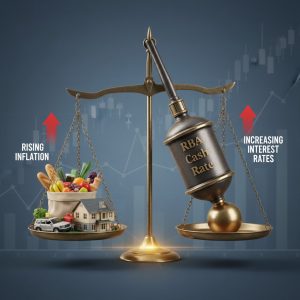
Why Do Interest Rates Rise During Inflation?
When inflation climbs, interest rates typically rise because central banks - like Australia's Reserve Bank - deliberately make...
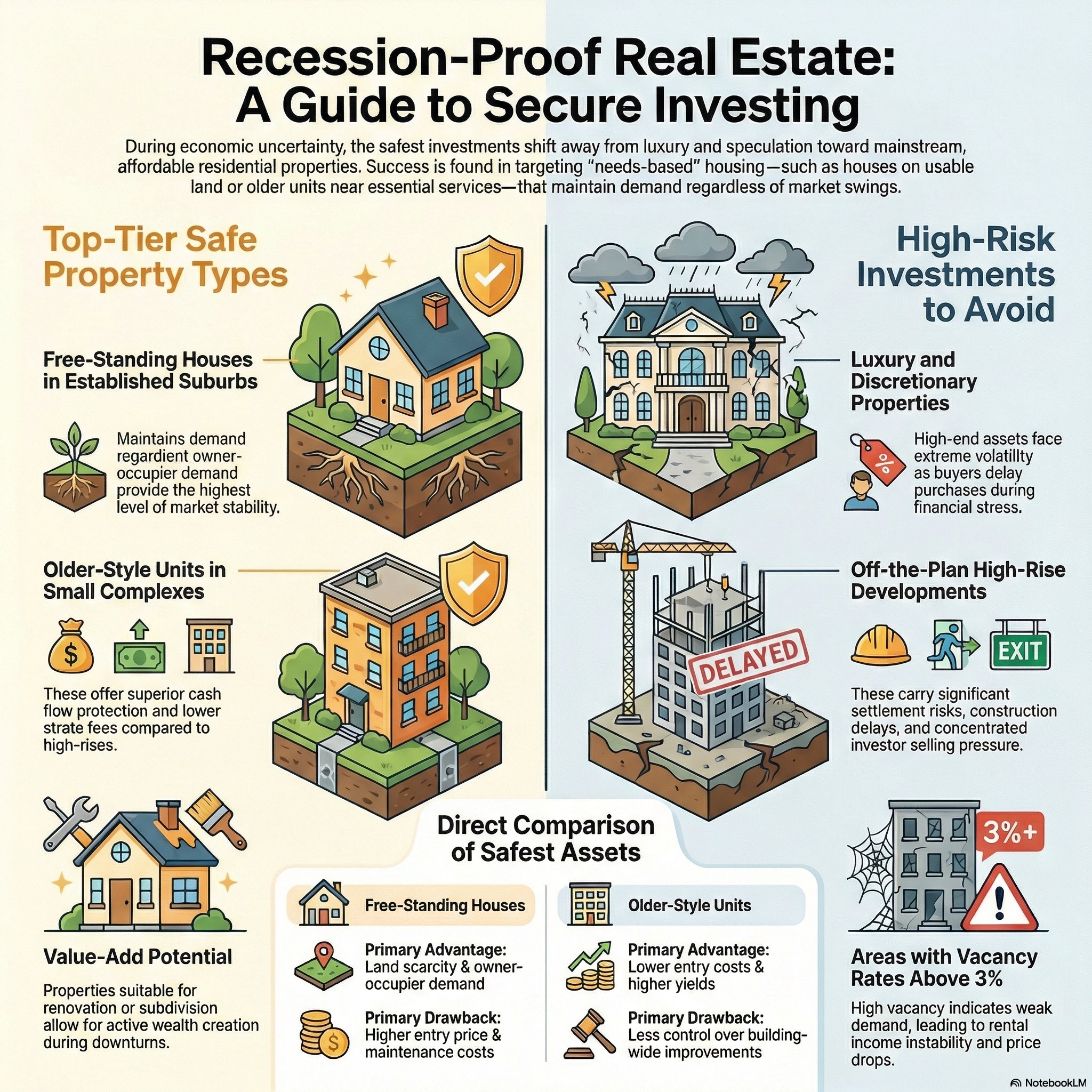
When economic storms hit, property investors face a critical question: which assets will weather the turbulence? During uncertain times, the safest property types focus on mainstream, affordable residential properties in areas with strong rental demand. Free-standing houses on usable land and well-located older units in small complexes typically offer the most resilience against income shocks and market volatility. The key lies in targeting what most people need rather than luxury or specialty properties.
Economic uncertainty triggers deep-seated fears about financial security and retirement planning. For investors like Rita, a 45-year-old professional with a nearly paid-off home, the thought of making the wrong investment decision when markets are choppy feels overwhelming. The fear of losing hard-earned savings or jeopardising retirement plans creates analysis paralysis at precisely the moment when strategic action could secure their financial future.
This emotional landscape drives investors toward properties that offer psychological comfort alongside financial returns. The “bricks and mortar” effect isn’t just about tangible assets—it’s about choosing investments that feel inherently stable and understandable. When sharemarket volatility dominates headlines, residential property’s fundamental role in providing shelter creates an emotional anchor that sophisticated investment products simply cannot match.
I remember exactly how that feels because I’ve stood in those same shoes. Even though my very first investment property was only $45,000, I was absolutely petrified. I spent nights wrestling with intense buyer’s remorse, convinced I was about to lose everything I’d worked for and that I’d made a massive mistake. Looking back, pushing through that paralyzing fear was the most important step I ever took; it was the catalyst for my confidence and the reason I can now help others navigate these same choppy waters. That initial hesitation is a natural part of the process, but as I learned firsthand, strategic action is the only thing that turns that fear into a secure future.
Free-standing houses represent the gold standard for safe property investment during economic turbulence. Their resilience stems from several key factors that become magnified during uncertain periods. Land scarcity remains the fundamental driver—while developers can build more apartments, they cannot create more well-located land in established areas.
During economic downturns, owner-occupier demand provides crucial market support that investor-heavy apartment complexes lack. Families still need homes regardless of economic conditions, and the Australian dream of house ownership creates consistent underlying demand even when investor sentiment wavers.
Consider the practical advantages: houses offer complete control over maintenance and improvements without strata committee approvals or levies. When cash flow tightens during economic stress, the ability to manage all property expenses directly becomes invaluable.
The safest house investments during uncertainty target established suburbs with diverse employment bases. Areas dependent on single industries face amplified risks during economic contractions. Instead, focus on suburbs with a mix of healthcare, education, government services, and established retail—sectors that maintain relative stability during downturns.
Infrastructure proximity becomes critical during uncertain times. Properties within walking distance of train stations, major hospitals, or established shopping centres maintain rental appeal even when discretionary spending drops. Tenants prioritise convenience and cost-effectiveness during economic stress, making well-located properties significantly more resilient.
While houses often claim the spotlight for safety, well-selected units can offer superior cash flow protection during economic uncertainty. The key lies in choosing older-style units in small, low-rise complexes with sensible strata fees rather than modern high-rise towers with heavy investor concentration.
Older unit complexes typically feature larger room sizes, established gardens, and character features that appeal to long-term tenants. These properties often sit in inner or middle-ring suburbs where young professionals and downsizing couples create stable rental demand. The smaller complex size means lower strata fees and greater owner-occupier involvement in building management.
Units near universities, hospitals, or major employment centres provide rental income stability that luxury properties cannot match. Healthcare workers, teachers, and university staff represent tenant demographics with relatively secure employment during economic downturns. These tenants also tend to stay longer, reducing vacancy periods and turnover costs during challenging periods.
The key is avoiding units that rely on discretionary spending or volatile employment sectors. Properties catering to tourism workers or mining boom towns face amplified risks during uncertainty, regardless of their initial yield appeal.
Luxury residential properties represent discretionary purchases that face severe pressure during economic stress. High-end buyers often delay purchases during uncertainty, while existing luxury property owners may face forced sales due to business pressures or investment losses in other asset classes.
The luxury market’s reliance on confidence and discretionary spending creates a dangerous vulnerability during economic contractions. Properties priced in the top 10% of their local market often experience larger percentage declines and longer selling periods when conditions deteriorate.
Off-the-plan high-rise apartments with heavy investor concentration represent perhaps the riskiest property type during economic uncertainty. These developments face multiple vulnerability points: construction delays, oversupply issues, and concentrated investor selling pressure.
When economic conditions tighten, investor demand for off-the-plan properties evaporates quickly. The combination of settlement risk, potential value decreases between contract and completion, and the challenge of securing finance for investment properties during credit tightening creates a dangerous risk cocktail.
Properties that rely heavily on government policy settings or specialized uses face amplified uncertainty during economic stress. Student accommodation dependent on international student numbers, commercial properties tied to specific industries, or residential investments relying on government incentives all carry elevated risk during policy uncertainty.
Fringe locations with substantial new supply also become problematic during economic downturns. These areas often experience rapid supply increases during boom periods, creating oversupply challenges when demand contracts during uncertain times.
Rental market tightness becomes crucial during economic uncertainty as it provides protection against both rent decreases and extended vacancy periods. Areas with vacancy rates consistently under 3% demonstrate strong underlying demand that persists even during economic contractions.
Low vacancy areas typically indicate limited alternative accommodation options, creating pricing power for landlords even during challenging periods. This rental income security becomes essential when interest rates remain elevated or other investment income sources face pressure.
During economic uncertainty, investors must model property performance under stressed conditions rather than assuming optimistic scenarios. Higher vacancy assumptions, potential rental decreases, and increased maintenance costs all become more likely during economic downturns.
Properties with yields that keep holding costs sensible even with 1-2% interest rate increases provide crucial buffer during uncertain periods. The ability to maintain positive or neutral cash flow during stressed conditions prevents forced selling during market downturns.
Areas surrounding major hospitals and established educational institutions provide exceptional investment security during economic uncertainty. Healthcare employment remains relatively stable during economic contractions, while educational institutions provide consistent rental demand from staff and mature students.
These locations often feature excellent public transport connections and established retail infrastructure, creating additional rental appeal. The combination of stable employment and convenient amenities attracts quality long-term tenants who weather economic storms better than transient renters.
Properties located near established government services, courts, or administrative centres benefit from employment stability that private sector locations cannot match. Government employment typically experiences less volatility during economic downturns, supporting both owner-occupier and rental demand.
The key is targeting areas with diverse government services rather than single-purpose locations. Suburbs featuring court complexes, administrative offices, and public services create broad-based employment stability.
Properties offering clear value-add potential provide additional security during uncertain times by creating alternative exit strategies. A house with renovation potential or subdivision possibilities offers multiple paths to value creation beyond simple capital appreciation.
During economic downturns, the ability to add value through improvement rather than relying solely on market appreciation becomes invaluable. Properties with unused floor space, large blocks suitable for subdivision, or obvious improvement needs provide active value creation opportunities.
The safest properties during uncertainty offer flexibility to adapt to changing market conditions. Houses that could accommodate multiple tenants, units suitable for both owner-occupation and investment, or properties with commercial development potential provide options during market stress.
This adaptability extends to rental strategies—properties that work for families, sharers, or professionals provide multiple tenant markets during economic changes.
Understanding borrowing capacity and finance structures becomes critical when investing in safe property types during uncertainty. Properties in the mainstream market typically offer better lending terms and greater lender acceptance than luxury or specialty assets.
Conservative loan-to-value ratios provide additional security buffers during market stress. The combination of stable rental income from safe property types and conservative borrowing creates a resilient investment structure that can weather extended uncertain periods.
Working with specialist property investment mortgage brokers who understand both safe property selection and appropriate finance structures ensures alignment between property choice and funding strategy.
The choice between different safe property types depends on your individual circumstances, borrowing capacity, and investment timeline. Investors with limited capital might start with well-located units to establish their portfolio, while those with greater resources might target free-standing houses for maximum long-term security.
The critical factor remains avoiding high-risk property types regardless of their initial appeal. During economic uncertainty, preservation of capital takes priority over maximum returns. Properties that offer steady rental income, moderate capital growth potential, and limited downside risk form the foundation of resilient investment portfolios.
Remember that property investment during uncertainty requires professional guidance to navigate both property selection and appropriate finance structures. The combination of safe property types and conservative financing creates the security needed to build wealth during challenging economic periods.
Ready to build a secure property portfolio that can weather any economic storm? Our team specialises in helping investors identify the safest property types and secure appropriate financing for long-term success. Book a mortgage review call today to discuss your property investment strategy and ensure your portfolio is positioned for stability and growth, regardless of economic conditions.
What makes free-standing houses safer than apartments during economic uncertainty?
Free-standing houses offer superior safety during economic uncertainty because land scarcity provides fundamental value protection, while owner-occupier demand creates market support that investor-heavy apartments lack. Houses also provide complete control over maintenance and improvements without strata committee restrictions or fee increases that can unexpectedly impact cash flow during downturns.
How do I identify areas with rental security during economic downturns?
Focus on areas with vacancy rates consistently under 3%, diverse employment bases including healthcare, education, and government services, and excellent transport links. Research historical performance during previous economic downturns and avoid locations dependent on single industries or discretionary spending sectors like tourism or mining to ensure rental income stability when markets tighten.
What are the warning signs of a risky property investment during uncertain times?
The main warning signs include heavy investor concentration in a single development, luxury price points (top 10% of the market), off-the-plan purchases with long settlement periods, reliance on specific government policies for viability, and locations with substantial new supply coming to market. Properties with these characteristics typically experience amplified volatility during economic uncertainty.
What yield should I target for safe property investments during uncertainty?
Target yields that keep your property cash flow positive even when accounting for potential interest rate increases of 1-2% and higher vacancy rates. In most Australian markets, this typically means gross yields of 4-5% for houses and 5-6% for units. Stress test your investment by calculating scenarios with reduced rent and increased holding costs to ensure financial resilience.
When inflation climbs, interest rates typically rise because central banks - like Australia's Reserve Bank - deliberately make...

Market volatility is inevitable in property investing, but it doesn't have to derail your wealth-building plans. Most successful...