

A well-funded, carefully scoped project can make 2026 a sensible renovation window, but debt-heavy or speculative work may be better postponed. The decision behind “is now a good time to renovate your home” depends less on predicting the perfect market and more on your purpose, budget, financing costs and likely increase in value. Renovating can make sense when it improves your lifestyle, rental income or saleability without exhausting your financial buffer. It becomes risky when optimistic estimates replace written quotes or when the project costs more than local buyers are likely to recognise. Your numbers should guide the final decision.
Key Takeaways
- Renovate when the project solves a clear lifestyle, maintenance, rental or resale problem.
- Compare the complete project cost with the likely increase in value, not just the building quote.
- Keep a contingency of at least 10% to 20% for variations and hidden defects.
- Cosmetic improvements often carry less risk than structural extensions and luxury upgrades.
- Do not use every dollar of available cash or equity to complete the project.
What makes home renovation in 2026 challenging?
The biggest challenge is not a lack of opportunity. It is the reduced margin for error.
Australian homeowners face elevated labour, material and borrowing costs. The Reserve Bank of Australia’s cash rate target was 4.60% from 30 September 2026, influencing home renovation interest rates and mortgage repayments. Even households with substantial equity should confirm they can comfortably service additional debt.
Good tradespeople may also be booked well in advance. Accepting the first available quote because you are eager to begin can expose you to inflated prices, weak contracts or rushed work.
Before proceeding, confirm whether your quotes include:
- GST, demolition and waste removal
- Planning, engineering and building approvals
- Temporary accommodation and storage
- Appliances, lighting and landscaping
- Finance interest during construction
- A contingency for water damage, asbestos or structural defects
A $100,000 building quote can become a $125,000 project after supporting expenses. That difference can turn an attractive home renovation into a serious cash-flow problem.
When is the best time to renovate your home?
The best time is when your finances, property and project are ready at the same time.
Imagine a couple in their mid-40s considering a $70,000 renovation. They have stable incomes, $45,000 in an offset account and usable equity, but they also want to purchase an investment property within two years.
Using their entire offset balance and increasing their mortgage could leave them exposed to a job change, rate rise or construction variation. It may also reduce their future borrowing capacity.
A safer approach might be to:
- Complete essential repairs first.
- Obtain at least three detailed written quotes.
- Stage cosmetic work over 12 months.
- Preserve an emergency reserve.
- Review how additional borrowing affects future plans.
Our guide to building a financial buffer through refinancing explains why accessible reserves matter when household costs or repayments change.
Weather can affect external painting and roofing, while indoor projects may suit quieter trade periods. However, financial readiness is more important than finding a supposedly perfect season.
How much should you budget for home renovation costs in 2026?
Your budget should be based on a complete scope, fixed assumptions and an appropriate contingency, not an online average.
Kitchen renovation costs vary according to cabinetry, appliances, layout changes and plumbing. A bathroom remodel 2026 project can become expensive when waterproofing, drainage or structural problems are uncovered.
Use this framework:
Maximum project budget = quoted work + professional fees + temporary costs + contingency + finance costs
| Cost item | Illustrative amount |
| Building and materials | $60,000 |
| Design, approvals and inspections | $6,000 |
| Storage and temporary costs | $3,000 |
| 15% construction contingency | $9,000 |
| Finance and miscellaneous costs | $2,000 |
| Working budget | $80,000 |
The additional $20,000 is not wasted money. It reduces the risk of relying on credit cards, leaving work unfinished or compromising essential repairs.
[NOTE: These figures are illustrative. Obtain local written quotes and professional advice before setting your renovation budget.]
Will the renovation add enough value?
A home renovation return on investment depends on whether the work closes a genuine gap between your property and comparable homes.
Compare recent sales of:
- Similar unrenovated properties
- Renovated homes on comparable land
- Homes with the bedroom, bathroom or parking you propose
- Properties with a similar standard of finish
If renovated homes sell for approximately $80,000 more than comparable unrenovated homes, spending $120,000 may be difficult to justify when resale value is your main objective.
By contrast, a targeted $15,000 refresh involving paint, flooring, lighting and street appeal could deliver a stronger perceived-value uplift. The best home renovations for resale value are not always the largest.
A $50,000 designer kitchen is unlikely to make sense where buyers expect practical, mid-range finishes. Overcapitalisation occurs when your spending exceeds what the local market is prepared to reward.
Review these home inspection mistakes before finalising your scope. Problems buyers and building inspectors will notice should generally take priority over fashionable finishes.
Renovating to sell versus renovating to stay
Your reason for renovating should determine what you spend.
| Objective | Better approach | Main risk |
| Sell within 12 months | Neutral cosmetic improvements | Choosing finishes buyers will not pay for |
| Live there long term | Functional and lifestyle upgrades | Spending without retaining a buffer |
| Increase rental income | Durable, low-maintenance improvements | Rent increase failing to cover the cost |
| Add equity | Work supported by comparable sales | Assuming every dollar spent adds value |
| Fix major defects | Complete essential repairs first | Allowing hidden damage to worsen |
If you are renovating to sell, fresh paint, flooring, lighting, an affordable kitchen refresh and improved street appeal may create more interest than a structural redesign.
If you intend to stay, lifestyle value matters too. A renovation does not need to deliver a dollar-for-dollar resale return if it makes your home safer and more functional for another decade.
Renovate vs buy a new house
Renovating may be more practical when you value your location and can create the required space without overcapitalising. Buying another home may be preferable when major structural work, planning restrictions or temporary accommodation make renovation excessively expensive.
Include selling costs, stamp duty, moving expenses and the new mortgage when comparing the two options. The cheapest choice on paper is not always the best long-term decision.
How should you finance a renovation?
Cash, an offset account, a loan top-up and refinancing can all work, but each has different long-term costs.
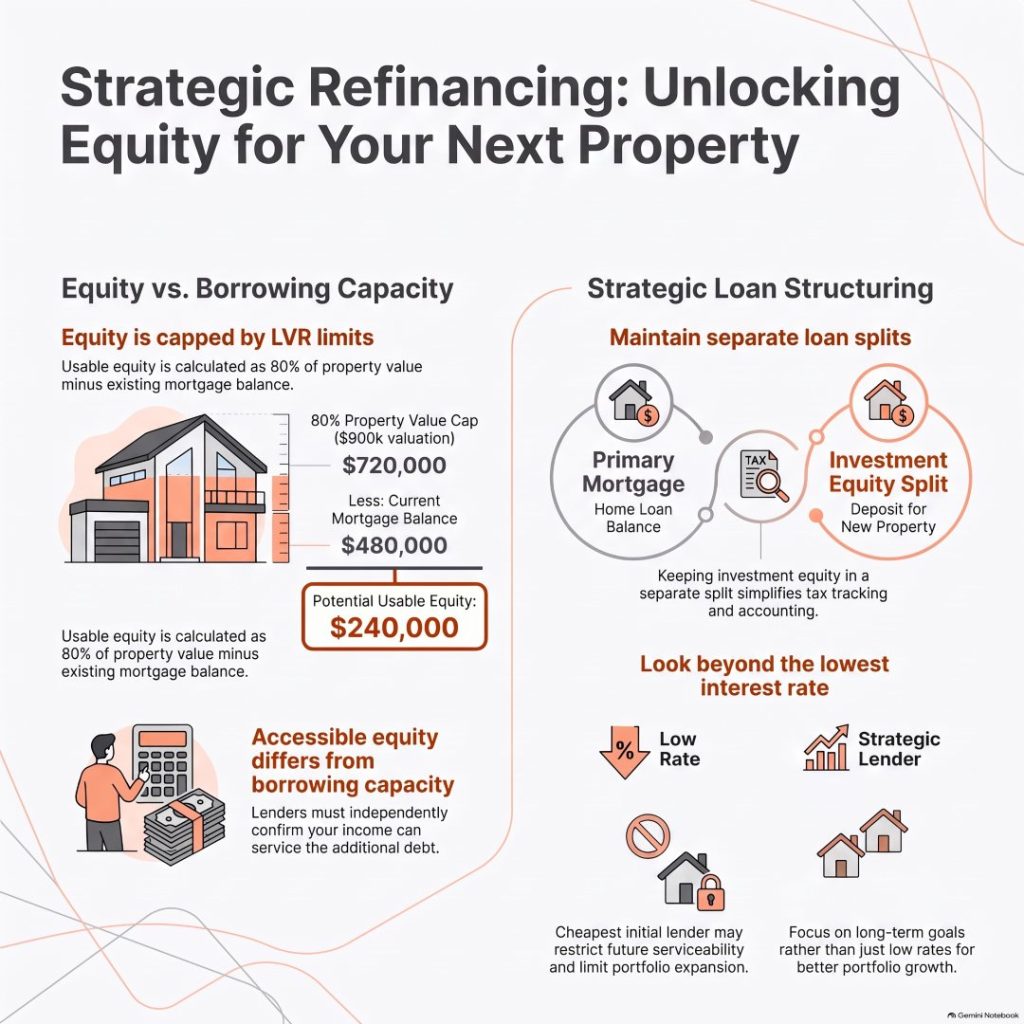
Home equity is not free money. It is additional debt secured against your property. Before accessing it, calculate repayments at a higher interest rate and decide how quickly the renovation debt will be repaid.
Our guide to getting cash from home equity compares loan top-ups, lines of credit and cash-out refinancing. Keep renovation borrowing separate from investment debt where possible and seek tax advice if the property earns income.
Before borrowing, ask:
- Can we afford repayments if rates or expenses rise?
- Will this reduce our capacity to buy another property?
- Will we retain three to six months of essential expenses?
Pros of Renovating Now
- Necessary repairs can prevent more expensive damage.
- Targeted improvements may increase comfort and saleability.
- A clear scope may secure current quotes and availability.
- Renovating may cost less than selling and buying elsewhere.
Cons of Renovating Now
- Labour, materials and finance may be expensive.
- Variations can quickly exhaust a tight budget.
- Construction can disrupt work and family life.
- Overcapitalised spending may not be recovered at sale.
Pros of Waiting to Renovate
- You can save more cash and reduce borrowing.
- Additional planning may produce a better design.
- You can monitor comparable sales.
- Waiting may improve your choice of contractors.
Cons of Waiting to Renovate
- Existing defects may deteriorate.
- Labour and material prices could rise further.
- Delays may reduce lifestyle or rental benefits.
- Indefinite waiting can leave an unsuitable home unchanged.
Conclusion: Make the decision using your numbers
Renovate when the purpose is clear, the complete cost is affordable and the likely benefit justifies the risk. Wait when the project depends on uncertain resale gains, maximum borrowing or an unrealistically small contingency.
Before signing a building contract, book a strategy call with us to understand how renovation finance could affect your mortgage, equity and future borrowing plans. You can also visit the Investors Choice Mortgages Hub for practical mortgage tools, calculators and property resources.
Frequently Asked Questions
Should I renovate my home now or wait until costs fall?
Waiting does not guarantee that labour, materials or finance will become cheaper. Proceed when the work is affordable, necessary and supported by a realistic scope, while preserving your financial buffer.
How much contingency should I allow for a home renovation?
Allow at least 10% to 20% above the expected construction cost. Older homes, structural alterations and uncertain site conditions may require a larger allowance.
Is it better to renovate or buy a new house?
Renovating may be preferable when you value your location and can create the required space within a sensible budget. Moving may be better when extensive structural work would lead to overcapitalisation.
Which home renovations give the best return on investment?
Painting, flooring, lighting, minor kitchen updates and improved street appeal often provide a lower-risk return. The best choice depends on what comparable buyers or tenants expect in your suburb.
Can I use home equity to pay for renovations?
Yes, subject to valuation, serviceability and lender approval. However, releasing equity increases your debt, may affect future borrowing capacity and should not leave you without emergency savings.